Summarize this blog post with:


Quick Summary
A digital marketing funnel helps businesses understand the complete customer journey, from the first brand interaction to becoming a loyal customer. It includes different stages such as awareness, interest, consideration, conversion, and retention, allowing businesses to create targeted strategies for each customer intent.
By using content marketing, SEO, social media, automation, and analytics, businesses can attract the right audience, nurture potential customers, improve conversions, and build long-term relationships. A structured funnel strategy helps businesses measure performance, optimise campaigns, and create sustainable growth.
- Key Takeaways
- Digital Marketing Funnel Explained: Awareness to Conversion
- What Is a Digital Marketing Funnel?
- Why Is a Digital Marketing Funnel Important for Businesses?
- Stages of a Digital Marketing Funnel: From Awareness to Conversion
- Stage 1: Awareness – Attracting Potential Customers
- Stage 2: Interest – Building Brand Engagement
- Stage 3: Consideration – Helping Customers Evaluate Options
- Stage 4: Conversion – Turning Leads into Customers
- Stage 5: Retention – Building Long-Term Customer Relationships
- How to Create an Effective Digital Marketing Funnel
- Step 1: Understand Your Target Audience
- Step 2: Create Content for Every Funnel Stage
- Step 3: Use Marketing Automation Tools
- Step 4: Measure and Optimise Funnel Performance
- How Digital Marketing Funnel Helps Businesses Grow
- Build a Digital Marketing Funnel That Turns Visitors Into Customers
Digital Marketing Funnel Explained: Awareness to Conversion
In today’s competitive digital landscape, customers rarely purchase a product or service immediately after discovering a brand. They go through multiple stages, starting from becoming aware of a business, researching available options, comparing solutions, and finally making a purchase decision. This complete journey is structured through a digital marketing funnel, which helps businesses understand how prospects move from initial interaction to becoming loyal customers.
According to a report by Statista, global digital advertising spending continues to grow rapidly and is expected to cross $700 billion by 2025, showing how businesses are increasing their investment in online channels to reach and convert customers. Additionally, research from HubSpot highlights that businesses using data-driven marketing strategies can better understand customer behaviour and improve their overall conversion process.
With increasing competition across industries, businesses need more than just online visibility. They need a structured approach that attracts the right audience, builds trust, nurtures potential customers, and encourages conversions. This is where professional digital marketing services play an important role by helping businesses create targeted campaigns, optimise customer touchpoints, and improve marketing performance.
A successful funnel ensures that every marketing activity has a clear purpose. Awareness campaigns introduce customers to a brand, engagement strategies build interest, consideration-stage content helps prospects evaluate solutions, and conversion-focused campaigns encourage customers to take action.
Whether a business works with in-house teams or partners with experienced digital marketing companies, having a well-defined funnel strategy helps align content, advertising, SEO, social media, and customer communication efforts. By analysing user behaviour and improving each stage, businesses can create better experiences and generate sustainable growth.
What Is a Digital Marketing Funnel?
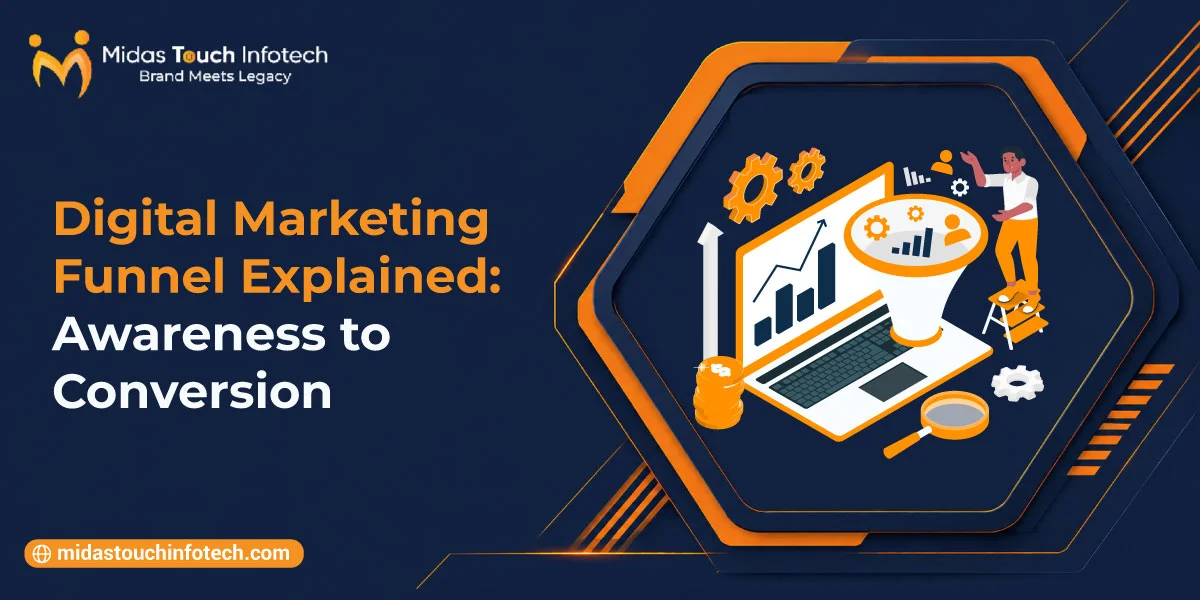
A digital marketing funnel is a strategic framework that represents the journey customers follow before making a purchase decision. It explains how potential customers move from discovering a brand to engaging with its content, evaluating solutions, and finally becoming paying customers. In the digital landscape, businesses use funnels to understand customer behaviour, deliver relevant information, and create targeted marketing strategies that improve conversions.
The digital marketing funnel consists of different stages that reflect customer intent, including awareness, interest, consideration, conversion, and retention. Each stage requires different marketing approaches, such as SEO content for attracting visitors, educational resources for building engagement, and personalised offers or consultations for encouraging conversions. By analysing customer interactions through digital marketing funnel analytics, businesses can identify opportunities to improve their marketing performance.
Unlike traditional marketing funnels that mainly rely on offline channels such as television, print media, and direct advertising, digital marketing funnels use online channels like search engines, social media, email marketing, paid campaigns, and analytics tools. Traditional funnels often provide limited customer insights, while digital funnels allow businesses to track user behaviour, personalise experiences, measure results, and optimise campaigns in real time. This data-driven approach helps businesses create more effective digital marketing funnel strategies and build stronger customer relationships.
Why Is a Digital Marketing Funnel Important for Businesses?
A digital marketing funnel helps businesses understand how customers interact with their brand throughout the buying journey. Instead of focusing only on attracting visitors, businesses can analyse customer behaviour, identify their needs, and create strategies that guide prospects from awareness to conversion. Understanding customer actions, preferences, and decision-making patterns helps businesses deliver more relevant content and improve overall customer experiences.
Experienced digital marketing companies use funnel-based strategies to organise marketing activities across different channels, including SEO, content marketing, social media, email campaigns, and paid advertising. A structured funnel improves lead generation and nurturing by helping businesses attract potential customers, engage them with valuable information, and build relationships before they are ready to purchase. This approach ensures that businesses do not lose potential opportunities due to a lack of follow-up or personalised communication.
A digital marketing funnel also enables businesses to create personalised marketing experiences based on customer interests, behaviour, and engagement levels. By using customer data and automation tools, businesses can deliver the right message at the right stage of the journey. This increases conversion opportunities by helping prospects make informed decisions and encouraging them to take action through relevant offers, consultations, or solutions.
Additionally, a funnel provides measurable insights into marketing performance. Through digital marketing funnel analytics, businesses can track important metrics such as website traffic, lead quality, conversion rates, and customer retention. These insights help identify successful strategies, optimise campaigns, reduce unnecessary marketing costs, and improve overall return on investment. A well-planned funnel creates a predictable growth process and supports long-term business success.
Also Read : Best Digital Marketing Agencies in Delhi to Grow Your Brand in 2026
Stages of a Digital Marketing Funnel: From Awareness to Conversion
A digital marketing funnel represents the complete customer journey, starting from the first interaction with a brand to becoming a loyal customer. Each stage of the funnel requires different strategies, content, and communication methods based on customer intent. Understanding these digital marketing funnel stages helps businesses attract the right audience, nurture relationships, and improve conversion opportunities.
A successful funnel strategy focuses on delivering the right message at the right time while tracking performance through relevant metrics. Let’s explore each stage in detail.
Stage 1: Awareness – Attracting Potential Customers
The awareness stage is the first step of the digital marketing funnel, where potential customers discover a brand, product, or service. At this stage, customers may not be ready to make a purchase but are looking for information, solutions, or answers to their problems.
The primary goal of this stage is to increase brand visibility and attract relevant audiences through different digital channels.
Marketing Strategies:
➣ SEO-Optimised Blog Content
Search engine optimisation helps businesses attract users who are actively searching for information related to their needs. Educational blogs, guides, and industry articles help improve online visibility and bring organic traffic.
Examples include:
• How-to guides
• Industry insights
• Problem-solving articles
• Educational resources
• Social Media Marketing
Social media platforms help businesses reach new audiences and build brand awareness through engaging content.
Businesses can use:
• Informative posts
• Short videos
• Customer stories
• Industry updates
• Paid Advertising Campaigns
Paid campaigns allow businesses to reach targeted audiences quickly through search engines and social platforms. These campaigns help increase visibility among users who are more likely to be interested in specific products or services.
➣ Video Content
Video content is an effective way to capture audience attention and explain complex topics in an engaging format.
Examples include:
• Explainer videos
• Product demonstrations
• Educational videos
• Expert interviews
• Influencer Collaborations
Partnering with relevant influencers helps businesses reach new audiences and build trust through authentic
recommendations.
Key Metrics to Track:
To measure awareness-stage performance, businesses should monitor:
➣ Website Traffic
Tracks the number of visitors discovering the brand through different channels.
➣ Social Media Reach
Measures how many people view and interact with brand content.
➣ Brand Impressions
Shows how frequently users see advertisements or marketing content.
➣ Content Engagement
Measures interactions such as likes, shares, comments, and content views.
Stage 2: Interest – Building Brand Engagement
After discovering a brand, customers enter the interest stage, where they start exploring more information and understanding available solutions.
The focus at this stage is to educate potential customers, build credibility, and encourage deeper engagement.
Marketing Strategies:
➣ Detailed Blog Posts
Long-form content helps customers understand topics in greater detail and positions a business as an industry expert.
Examples include:
• Detailed guides
• Research-based articles
• Expert opinions
• Educational resources
➣ Case Studies
Case studies demonstrate how businesses have successfully solved customer challenges. They help potential customers understand real-world results and build confidence in a solution.
➣ Webinars
Webinars allow businesses to share expertise and directly interact with potential customers.
They are useful for:
• Complex services
• B2B solutions
• Industry education
• Product demonstrations
➣ Email Newsletters
Email newsletters help businesses maintain regular communication with interested prospects by sharing:
• New content
• Industry updates
• Product information
• Special offers
Key Metrics to Track:
➣ Time Spent on Website
Shows whether visitors find website content valuable and engaging.
➣ Email Subscriptions
Indicates the number of users interested in receiving regular updates.
➣ Content Downloads
Measures engagement with valuable resources such as guides and reports.
➣ Returning Visitors
Shows whether users continue interacting with the brand.
Stage 3: Consideration – Helping Customers Evaluate Options
During the consideration stage, customers actively compare different solutions before making a purchase decision. They are looking for detailed information, proof, and reasons to choose one business over another.
Businesses need to focus on building trust and showing the value of their solutions.
Marketing Strategies:
➣ Customer Testimonials
Customer testimonials provide social proof and help prospects understand how others have benefited from a product or service.
➣ Reviews and Ratings
Online reviews influence customer decisions by showing credibility, reliability, and customer satisfaction.
➣ Free Consultations
Free consultations allow businesses to understand customer requirements and provide personalised
recommendations.
They help:
• Build relationships
• Answer customer questions
• Identify customer needs
➣ Demo Requests
Product or service demonstrations help customers understand features, benefits, and practical applications.
➣ Solution-Focused Content
Businesses should create content that focuses on solving customer problems.
Examples include:
• Comparison pages
• Solution guides
• FAQs
• Industry-specific content
Key Metrics to Track:
➣ Demo Requests
Measures customer interest in exploring a solution further.
➣ Consultation Bookings
Shows the number of prospects moving closer to a purchase decision.
➣ Sales Enquiries
Tracks potential customers showing buying intent.
➣ Landing Page Conversions
Measures how effectively pages encourage visitors to take action.
Stage 4: Conversion – Turning Leads into Customers
The conversion stage is where interested prospects become paying customers. At this stage, businesses need to remove purchase barriers and make the decision-making process simple and effective.
A strong digital marketing sales funnel uses targeted strategies to encourage customers to complete the desired action.
Marketing Strategies:
➣ Strong CTAs
Clear calls-to-action guide customers towards the next step.
Examples:
• Request a quote
• Book a consultation
• Start a free trial
• Contact the team
➣ Limited-Time Offers
Special offers can encourage customers who are interested but delaying their decision.
Examples:
• Limited-period discounts
• Exclusive packages
• Free consultations
➣ Free Trials
Free trials allow customers to experience the value of a product or service before making a purchase.
➣ Sales Follow-Ups
Timely follow-ups help businesses answer customer questions and improve conversion opportunities.
➣ Optimised Landing Pages
Landing pages should include:
• Clear messaging
• Benefits
• Customer reviews
• Simple forms
• Strong CTAs
Key Metrics to Track:
➣ Conversion Rate
Measures the percentage of visitors completing the desired action.
➣ Customer Acquisition Cost
Shows the investment required to acquire a new customer.
➣ Sales Revenue
Measures the financial results generated through marketing activities.
➣ Lead-to-Customer Ratio
Shows how effectively leads are converted into customers.
Stage 5: Retention – Building Long-Term Customer Relationships
The customer journey does not end after conversion. The retention stage focuses on maintaining relationships, improving customer satisfaction, and encouraging repeat business.
A successful digital marketing funnel strategy includes retention activities that help businesses turn customers into long-term brand supporters.
Marketing Strategies:
➣ Email Automation
Automated emails help businesses maintain communication through:
• Product updates
• Educational content
• Renewal reminders
• Personalised recommendations
➣ Loyalty Programs
Loyalty programs encourage repeat purchases by offering:
• Exclusive benefits
• Rewards
• Special discounts
• Early access
➣ Customer Support
Strong customer support improves satisfaction and builds long-term trust.
Businesses should provide:
• Quick responses
• Helpful resources
• Multiple communication channels
➣ Exclusive Offers
Personalised offers help increase customer loyalty and encourage continued engagement.
Key Metrics to Track:
➣ Customer Retention Rate
Measures how effectively businesses maintain customers over time.
➣ Repeat Purchases
Shows customer loyalty and ongoing engagement.
➣ Customer Lifetime Value
Measures the total revenue generated from a customer relationship.
➣ Reviews and Referrals
Indicates customer satisfaction and helps attract new customers through recommendations.
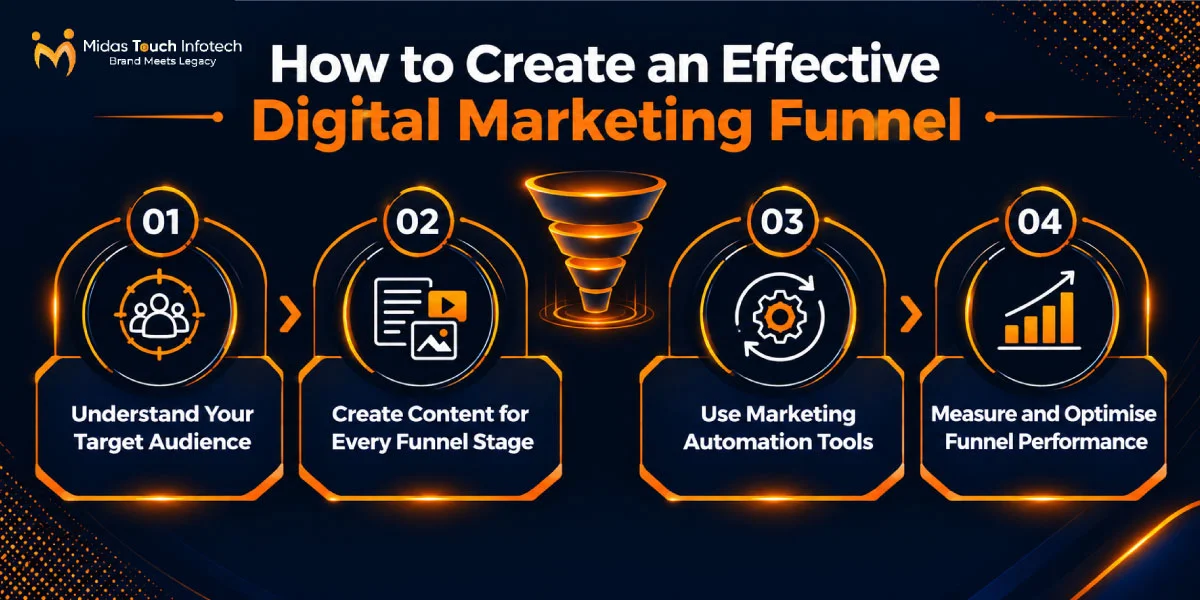
How to Create an Effective Digital Marketing Funnel
Creating an effective digital marketing funnel requires a strategic approach that focuses on understanding customers, delivering valuable content, automating interactions, and continuously improving performance. A successful funnel helps businesses guide potential customers through every stage of their journey, from discovering a brand to becoming loyal customers.
By aligning marketing activities with customer intent, businesses can generate qualified leads, improve engagement, and increase conversion opportunities.
Step 1: Understand Your Target Audience
The first step in creating a successful funnel is understanding your target audience and their requirements. Businesses need to identify customer needs, challenges, preferences, and decision-making behaviour to create marketing strategies that connect with the right audience.
Understanding customer needs and challenges helps businesses develop messages and solutions that address real problems. By analysing customer pain points, businesses can create content that provides value and builds trust.
Creating detailed buyer personas is another important part of this process. A buyer persona represents an ideal customer profile and includes information such as:
• Customer demographics
• Industry or business type
• Job role
• Common challenges
• Buying motivations
• Preferred solutions
Buyer personas help businesses understand who they are targeting and what influences their purchasing decisions.
Businesses should also analyse search behaviour and preferences to understand:
• What customers are searching for online
• Which platforms they use for information
• What type of content they prefer
• Which factors influence their final decision
This information helps businesses create a more personalised and effective funnel strategy.
Step 2: Create Content for Every Funnel Stage
Content plays a critical role in moving customers through different stages of the funnel. Customers need different types of information depending on their awareness level and buying intent.
A successful content strategy ensures that businesses provide the right information at the right time.
◆ Awareness Content: Educational Blogs and Social Posts
The awareness stage focuses on attracting potential customers and increasing brand visibility.
Businesses can create:
• Educational blog posts
• Social media content
• Industry insights
• Videos
• Infographics
• How-to guides
This type of content helps users discover a brand while searching for solutions to their problems.
For example, an informative blog addressing customer challenges can attract visitors through search engines and introduce them to a business.
◆ Consideration Content: Guides, Comparisons, and Case Studies
During the consideration stage, customers evaluate different solutions before making a decision. Businesses need content that helps prospects understand their options and build confidence.
Consideration-stage content includes:
• Detailed guides
• Comparison articles
• Case studies
• Customer testimonials
• Research reports
This content demonstrates expertise and helps customers understand the benefits of choosing a particular solution.
◆ Conversion Content: Service Pages, Demos, and Offers
Conversion-focused content encourages customers to take action and move closer to purchase.
Examples include:
• Service pages
• Product pages
• Demo request pages
• Consultation forms
• Free trials
• Special offers
Strong conversion content should clearly communicate value, address customer concerns, and provide a simple next step.
Step 3: Use Marketing Automation Tools
Marketing automation helps businesses manage customer interactions, improve efficiency, and maintain consistent communication throughout the funnel.
Modern automation solutions allow businesses to streamline repetitive tasks and create personalised customer experiences.
◆ Businesses can automate:
• Email nurturing campaigns
• Lead qualification
• Customer segmentation
• Follow-up messages
• Campaign tracking
Automated email nurturing helps businesses stay connected with potential customers by sharing relevant content based on their interests and actions.
For example, a visitor who downloads an industry guide can receive follow-up emails containing related resources, case studies, or consultation opportunities.
Professional digital marketing consulting services help businesses select the right automation platforms, design effective workflows, and improve lead management processes.
◆ Businesses can also use automation tools to:
• Track customer interactions
• Understand user behaviour
• Identify high-value leads
• Improve follow-up processes
By analysing customer activities, businesses can deliver more relevant communication and improve conversion opportunities.
Step 4: Measure and Optimise Funnel Performance
A digital marketing funnel requires continuous monitoring and improvement to achieve better results. Businesses need to analyse performance data and identify areas where customers may leave the journey.
Using digital marketing funnel analytics, businesses can understand how users interact with different marketing channels and optimise campaigns accordingly.
◆ Analyse Conversion Rates
Conversion rate analysis helps businesses measure how effectively visitors move through different funnel stages.
◆ Businesses should track:
• Website visitor-to-lead conversions
• Landing page performance
• Form submissions
• Sales enquiries
• Lead-to-customer conversion rates
These insights help identify which strategies are generating the best results.
◆ Identify Drop-Off Points
Drop-off points occur when potential customers leave the funnel before completing the desired action.
◆ Common reasons include:
• Complicated forms
• Poor website experience
• Unclear messaging
• Lack of trust factors
• Slow page performance
Identifying these challenges allows businesses to improve the customer journey and reduce lost opportunities.
◆ Improve Campaigns Based on Data
Data-driven optimisation helps businesses improve marketing performance over time.
◆ Businesses can test and improve:
• Content formats
• Headlines
• Calls-to-action (CTAs)
• Landing pages
• Advertising campaigns
• Email sequences
Regular analysis and optimisation ensure that the funnel remains effective, helping businesses attract more qualified leads, improve conversions, and achieve sustainable growth.
Also Read : Digital Marketing Agency in California: Services, Costs, and ROI
How Digital Marketing Funnel Helps Businesses Grow
A well-planned digital marketing funnel helps businesses attract the right audience and generate qualified leads by understanding customer behaviour at every stage of the buying journey. Instead of focusing only on website traffic, businesses can identify potential customers, nurture their interest through valuable content, and guide them towards making informed decisions. This structured approach improves the effectiveness of lead generation digital marketing funnel strategies.
A digital funnel also improves customer engagement by delivering personalised experiences based on customer needs and preferences. From educational blogs and social media content in the awareness stage to case studies, consultations, and offers in the conversion stage, businesses can provide relevant information at the right time. This helps build trust, strengthen relationships, and improve customer satisfaction.
By analysing customer interactions through digital marketing funnel analytics, businesses can identify which campaigns, channels, and content generate the best results. This data-driven approach helps reduce unnecessary marketing expenses by allowing businesses to invest in strategies that deliver better returns. It also helps optimise campaigns, improve conversion rates, and maximise marketing performance.
Most importantly, a successful funnel creates a predictable growth process by converting visitors into leads and leads into loyal customers. With the right combination of content, automation, and customer-focused strategies, businesses can maintain long-term relationships, encourage repeat purchases, and build sustainable growth. Partnering with experienced digital marketing consulting services can further help businesses develop and optimise a funnel strategy aligned with their goals.
Build a Digital Marketing Funnel That Turns Visitors Into Customers
Every customer journey is different. Businesses cannot rely on a one-size-fits-all approach because customer expectations, industries, and buying behaviours continue to change.
A successful digital marketing funnel strategy requires a combination of customer understanding, valuable content, effective communication, and continuous optimisation.
From attracting new audiences through SEO and social media to converting prospects through personalised campaigns, every funnel stage plays an important role in business growth.
Businesses looking to improve their online presence can benefit from expert guidance through digital marketing consultation India services. Professional consultants can help identify customer journey gaps, select the right marketing channels, optimise campaigns, and create strategies focused on measurable outcomes.
Working with experienced digital marketing companies allows businesses to implement proven strategies, use advanced analytics, and create a scalable marketing system.
The future of digital growth depends on understanding customers, delivering value, and creating seamless experiences across every touchpoint. A strong digital marketing funnel helps businesses transform visitors into customers and customers into long-term brand supporters.
By investing in the right strategy, technology, and expertise, businesses can build a sustainable digital presence and achieve consistent growth in an increasingly competitive online marketplace.
Key-Takeaways
- Understand Customer Journey: A digital marketing funnel helps businesses track customer movement from awareness to purchase decisions.
- Focus on Funnel Stages: Each stage requires different strategies, including awareness, engagement, conversion, and retention activities.
- Create Targeted Content: Businesses can use blogs, guides, case studies, and offers to engage customers based on their intent.
- Use Data & Automation: Analytics and automation tools help track performance, personalise communication, and improve conversions.
- Optimise Long-Term Growth: A well-planned funnel helps generate leads, increase customer loyalty, and build predictable business growth.

Mit Thakkar
Mit Thakkar, CEO of Midas Touch Infotech and a recognized LinkedIn SEO influencer, possesses extensive expertise in branding, website development, and digital marketing. He excels in transforming ideas into impactful digital strategies.