Summarize this blog post with:


Quick Summary
A complete on-page SEO checklist helps businesses optimise website pages, improve search rankings, and increase organic visibility through a structured approach. It covers essential factors such as keyword optimisation, title tags, meta descriptions, content quality, internal linking, image optimisation, page speed, mobile usability, and technical improvements.
This guide explains 25+ on-page SEO factors that help search engines better understand website content while improving user experience. From creating SEO-friendly content and optimising Core Web Vitals to improving E-E-A-T signals and preparing for AI search, these practices help businesses build a stronger online presence and achieve long-term growth.
- Key Takeaways
- Complete On-Page SEO Checklist: 25+ Factors to Optimise Your Website Pages
- What is On-Page SEO and Why Does It Matter?
- ◈ Understanding On-Page SEO
- ◈ Benefits of Optimising Website Pages
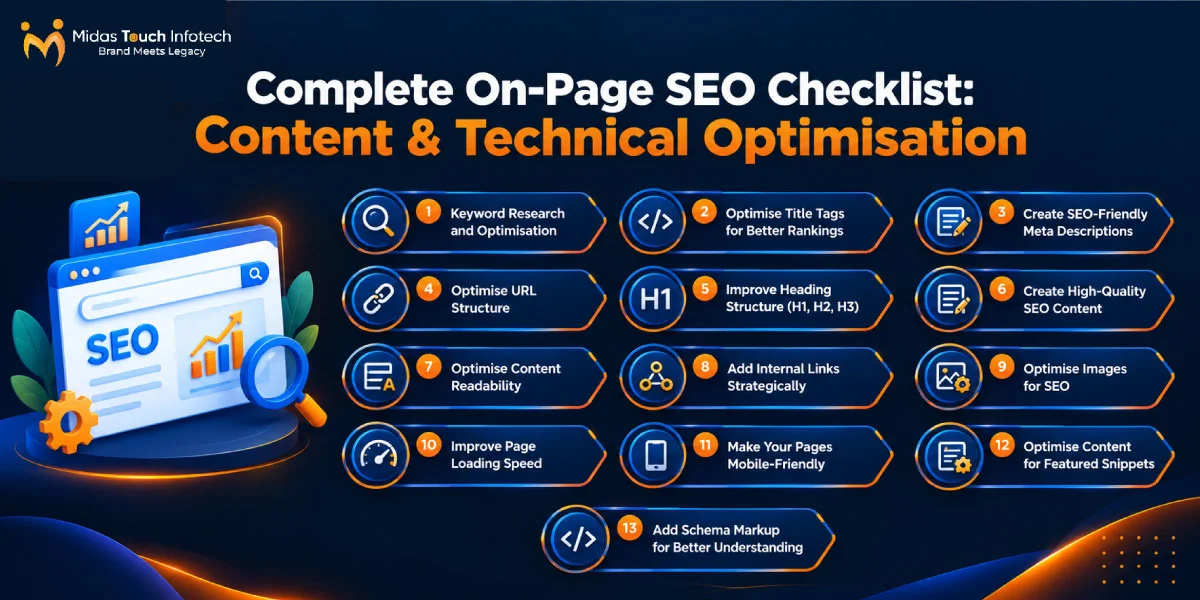
- Complete On-Page SEO Checklist: 25+ Factors to Optimise Your Website
- 1. Keyword Research and Optimisation
- 2. Optimise Title Tags for Better Rankings
- Common On-Page SEO Mistakes to Avoid
- 1. Keyword Stuffing
- 2. Duplicate Content
- 3. Missing Title Tags and Meta Descriptions
- 4. Poor Mobile Experience
- 5. Ignoring Search Intent
- 6. Slow Page Speed
- 7. Weak Internal Linking Structure
- Transform Your Website Performance with a Complete On-Page SEO Strategy
Complete On-Page SEO Checklist: 25+ Factors to Optimise Your Website Pages
In today’s competitive digital landscape, ranking a website on search engines requires more than just publishing content. Businesses need a structured approach to optimise every element of their web pages, from content quality and keywords to technical elements and user experience. A well-planned on page seo checklist helps businesses identify optimisation opportunities and improve their chances of gaining higher organic visibility.
According to a report by BrightEdge, organic search drives around 53% of all website traffic, making SEO one of the most valuable channels for sustainable online growth. Additionally, Google processes billions of searches every day, which highlights the importance of creating search-friendly pages that match user intent and provide valuable answers.
For businesses investing in professional seo services india, on-page optimisation plays a crucial role in improving website performance. Search engines analyse multiple page-level factors, including content relevance, HTML elements, page speed, mobile usability, and internal linking structure, before determining rankings.
A strong optimisation strategy helps search engines better understand what a webpage offers while improving the experience for visitors. Whether you are launching a new website, improving existing pages, or managing a large business website, following a complete on-page seo optimization checklist ensures that every important ranking factor is properly addressed.
This detailed guide covers a complete on page seo audit checklist with 25+ actionable factors that marketers, businesses, and website owners can follow to improve rankings, increase organic traffic, and build a stronger online presence.
What is On-Page SEO and Why Does It Matter?
◈ Understanding On-Page SEO
On-page SEO refers to the process of optimising individual website pages to improve search engine rankings and attract relevant organic traffic. Unlike off-page SEO activities such as backlink building and online reputation management, on-page SEO focuses on elements that can be directly controlled within a website.
These elements include:
• Website content quality
• Keyword optimisation
• Title tags and meta descriptions
• Heading structure
• URL optimisation
• Internal links
• Images
• Page speed
• User experience signals
• Schema markup
A proper seo on page optimization checklist helps ensure that every important page element is aligned with search engine guidelines and user expectations.
For example, a service page targeting “SEO consulting services” should clearly explain the service, include relevant keywords naturally, answer user questions, and provide a smooth navigation experience. This allows search engines to understand the page topic and match it with relevant search queries.
◈ Benefits of Optimising Website Pages
Effective on-page SEO provides several advantages for businesses:
➔ Improves Search Engine Visibility
Optimised pages have better chances of appearing for relevant searches because search engines can easily understand the content topic and purpose.
➔ Helps Target Relevant Keywords
Using the right keywords strategically allows businesses to attract users who are actively searching for their products or services.
➔ Enhances User Experience
SEO is not only about rankings. A well-optimised page improves readability, navigation, loading speed, and overall visitor experience.
➔ Increases Organic Traffic and Conversions
When pages rank for relevant keywords and provide valuable information, they attract more qualified visitors and create better conversion opportunities.
Businesses working with a professional seo consultant often focus on combining technical optimisation with content improvements to achieve long-term growth.
Complete On-Page SEO Checklist: 25+ Factors to Optimise Your Website
A successful SEO strategy requires attention to multiple page-level factors. The following checklist for on page seo covers the most important optimisation areas that help improve website visibility and performance.
1. Keyword Research and Optimisation
✧ Find the Right Target Keywords
Keyword research is the foundation of every successful SEO campaign. Before creating or updating a page, businesses should identify keywords that match user search intent.
Important factors to consider include:
• Search volume
• Keyword competition
• Search intent
• Business relevance
• User expectations
For example, a company offering SEO solutions should target keywords related to its audience needs rather than using only broad terms.
A proper on-page seo audit checklist should always begin with keyword analysis to ensure pages are targeting the right search opportunities.
Primary keywords should represent the main topic, while secondary keywords should support related searches.
✧ Optimise Keywords Naturally
After selecting keywords, they should be placed naturally throughout the page.
Important keyword placement areas include:
• Page title
• First paragraph
• Headings
• URL
• Meta description
• Image alt text
• Content sections
However, keyword stuffing should be avoided because excessive keyword usage can reduce readability and negatively impact user experience.
The goal of on page seo checklist guidelines is to create content that satisfies both search engines and users.
2. Optimise Title Tags for Better Rankings
✧ Best Practices for SEO-Friendly Title Tags
Title tags are one of the most important on-page ranking elements because they help search engines and users understand the page topic.
An effective title tag should:
• Include the primary keyword
• Clearly describe page content
• Match search intent
• Encourage users to click
• Maintain an appropriate length
Following best on page seo practices helps businesses create titles that improve visibility and click-through rates.
For example:
Poor Title:
SEO Services
Optimised Title:
Professional SEO Services to Improve Website Rankings
Checklist:
☑ Primary keyword included
☑ Unique title for every page
☑ Matches search intent
☑ Clear and engaging wording
A well-written title improves the first impression users get from search results and increases the possibility of receiving clicks.
3. Create SEO-Friendly Meta Descriptions
✧ How to Write Effective Meta Descriptions
Meta descriptions provide a short summary of webpage content that appears below the title in search results.
Although meta descriptions are not direct ranking factors, they influence click-through rates by helping users decide whether a page is relevant.
Best practices include:
➥ Summarise the page accurately
➥ Include target keywords naturally
➥ Highlight benefits
➥ Add a clear call-to-action
Example:
“Improve your website rankings with expert SEO strategies, technical optimisation, and content solutions designed for sustainable growth.”
Checklist:
☑ Unique description for every page
☑ Around 150–160 characters
☑ Includes relevant keywords
☑ Encourages clicks
A properly optimised meta description supports a complete seo on page optimization checklist and improves search visibility.
4. Optimise URL Structure
✧ Create Clean and Search-Friendly URLs
URLs help search engines understand page topics while providing users with a clear idea about webpage content.
SEO-friendly URLs should be:
• Short and descriptive
• Easy to read
• Keyword-focused
• Free from unnecessary parameters
Example:
Good URL:
website.com/on-page-seo-checklist
Poor URL:
website.com/page?id=12345
Best practices:
➥ Use lowercase characters
➥ Avoid unnecessary symbols
➥ Remove dates unless required
➥ Keep URLs relevant to page content
A clean URL structure improves usability and supports better crawling and indexing.
5. Improve Heading Structure (H1, H2, H3)
✧ Follow Proper Content Hierarchy
Headings organise content and help search engines understand the structure of a webpage.
A properly structured page should include:
H1 Tag
The H1 should represent the main topic of the page and should generally be used only once.
H2 Tags
H2 headings divide major sections and improve content readability.
H3 Tags
H3 headings explain supporting topics under each main section.
Example:
H1: Complete On-Page SEO Checklist
H2: Keyword Optimisation
H3: Keyword Research Process
Checklist:
☑ One clear H1 tag
☑ Keyword-focused headings
☑ Logical content flow
☑ Improved readability
A strong heading structure is an important part of any on-page seo checklist for new websites because it creates a better foundation for search engine understanding.
6. Create High-Quality SEO Content
✧ Write Content That Matches Search Intent
Search engines prioritise content that provides valuable answers to users. Creating content without understanding search intent can reduce ranking opportunities.
Before writing content, analyse:
• What users are searching for
• Existing ranking pages
• Common questions
• Required information depth
Businesses looking for seo consulting services india often focus on creating content strategies that align with customer needs and search behaviour.
High-quality SEO content should:
• Answer user questions
• Provide practical information
• Include examples
• Solve audience problems
• Demonstrate expertise
• Improve Content Quality
Content quality can be improved by:
• Adding recent statistics
• Updating outdated information
• Including expert opinions
• Supporting claims with trusted sources
• Maintaining originality
Search engines increasingly focus on helpful content that provides genuine value instead of content created only for rankings.
Also Read: SEO Packages for Small Businesses: A Complete Guide to Choosing the Right Plan
7. Optimise Content Readability
✧ Make Content Easy to Scan
Even valuable content may fail if users find it difficult to read. Improving readability keeps visitors engaged and encourages them to explore more pages.
Best practices include:
☑ Use short paragraphs
☑ Add bullet points
☑ Use clear headings
☑ Include images and visuals
☑ Avoid complex sentences
Readable content improves user engagement metrics and supports better overall page performance.
8. Add Internal Links Strategically
✧ Build Strong Website Connections
Internal linking connects different pages within a website and helps search engines discover important content.
Benefits include:
• Better website navigation
• Improved page authority distribution
• Increased user engagement
• Easier crawling
Best practices:
➥ Link relevant pages together
➥ Use descriptive anchor text
➥ Prioritise important pages
➥ Fix broken internal links
Checklist:
☑ Link important service pages
☑ Avoid excessive linking
☑ Use relevant anchor text
☑ Remove broken links
A strong internal linking structure is an essential part of an effective seo on page optimization checklist.
9. Optimise Images for SEO
✧ Image SEO Best Practices
Images improve user experience and make content more engaging, but they also require optimisation.
Important image optimisation steps:
• Use descriptive file names
• Add relevant alt text
• Compress image size
• Select suitable formats
• Maintain image quality
For example:
Poor filename:
IMG12345.jpg
Optimised filename:
on-page-seo-checklist-guide.jpg
Optimised images improve page speed, accessibility, and search engine understanding.
10. Improve Page Loading Speed
✧ Technical Factors Affecting Speed
Page speed is an important factor that impacts both search rankings and user experience. Visitors expect websites to load quickly, and slow pages can increase bounce rates and reduce conversions.
A complete on page seo optimization checklist should include website performance checks because search engines consider page experience when evaluating rankings.
Important page speed optimisation practices include:
• Optimising images before uploading
• Reducing unnecessary JavaScript and CSS files
• Enabling browser caching
• Using a reliable hosting environment
• Improving Core Web Vitals performance
A faster website provides a smoother browsing experience and helps search engines efficiently crawl website pages.
11. Make Your Pages Mobile-Friendly
✧ Mobile SEO Optimisation Checklist
With most online searches happening through mobile devices, having a mobile-friendly website is essential for SEO success.
Google uses mobile-first indexing, which means it primarily evaluates the mobile version of a website for ranking and indexing.
Mobile optimisation checklist:
☑ Responsive website design
☑ Easy navigation on smaller screens
☑ Proper font sizes
☑ Clickable buttons and links
☑ Fast mobile loading speed
☑ Avoid intrusive pop-ups
A website that performs well across all devices improves user satisfaction and supports stronger organic visibility.
12. Optimise Content for Featured Snippets
✧ Structure Content for Search Results
Featured snippets provide users with quick answers directly on search results pages. Optimising content for snippets can improve visibility and increase brand exposure.
Common featured snippet formats include:
• Paragraph answers
• Numbered lists
• Bullet points
• Tables
• FAQs
To optimise content:
• Answer questions directly
• Use clear formatting
• Add question-based headings
• Provide concise explanations
For example, instead of writing a long introduction before answering a question, provide a direct answer followed by detailed information.
This approach supports modern on-page seo checklist guidelines and improves content visibility across search features.
13. Add Schema Markup for Better Understanding
✧ Types of Schema to Consider
Schema markup helps search engines better understand website content and display enhanced search results.
Common schema types include:
FAQ Schema
Used for pages containing frequently asked questions.
Article Schema
Helps search engines understand blog content and publishing information.
Product Schema
Useful for ecommerce websites displaying product details.
Local Business Schema
Helps local businesses provide information such as:
• Business name
• Address
• Contact details
• Operating hours
Adding structured data improves content understanding and can increase search result appearance.
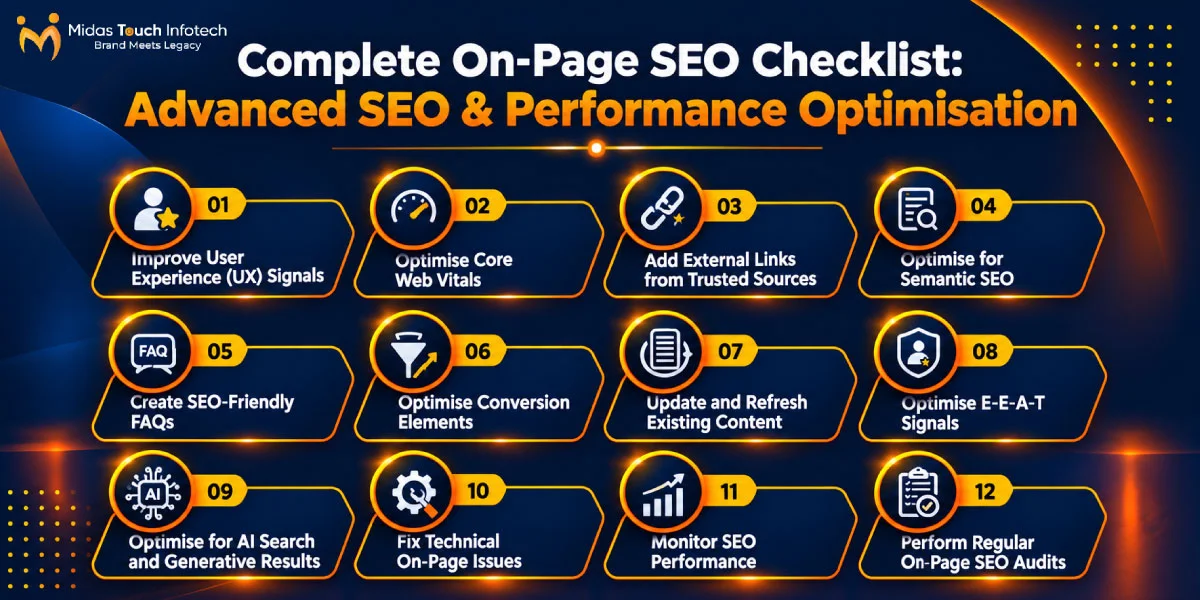
14. Improve User Experience (UX) Signals
✧ Key UX Factors for SEO
Search engines focus heavily on user experience because websites should provide valuable and accessible information.
Important UX factors include:
• Clear website navigation
• Simple page layout
• Easy content readability
• Fast loading pages
• Logical information structure
A positive user experience encourages visitors to stay longer, explore more pages, and take desired actions.
Businesses working with a professional seo consultant often combine SEO strategies with UX improvements to achieve better long-term results.
15. Optimise Core Web Vitals
✧ Important Performance Metrics
Core Web Vitals measure important aspects of website performance and user experience.
The three primary metrics include:
⁍ Largest Contentful Paint (LCP)
Measures how quickly the main content loads on a webpage.
⁍ Interaction to Next Paint (INP)
Measures website responsiveness when users interact with elements.
⁍ Cumulative Layout Shift (CLS)
Measures visual stability and unexpected page movement.
Improving these metrics helps create a smoother browsing experience and supports better page performance.
16. Add External Links from Trusted Sources
✧ Benefits of External Linking
External links connect your content with reliable sources and help provide additional value to readers.
Benefits include:
• Supporting content credibility
• Providing additional resources
• Improving topical relevance
• Building user trust
Best practices:
➥ Link only to trusted websites
➥ Use relevant sources
➥ Avoid excessive external links
➥ Ensure links add value
For example, adding statistics from trusted research organisations strengthens content reliability.
17. Optimise for Semantic SEO
✧ Use Related Keywords and Topics
Modern SEO is not limited to using one keyword repeatedly. Search engines understand topics by analysing related terms, concepts, and user intent.
Semantic SEO includes:
• Adding keyword variations
• Covering related topics
• Answering supporting questions
• Including industry-specific terms
For example, a page about SEO services may naturally include related terms such as:
• Website optimisation
• Search visibility
• Organic traffic
• Keyword research
• Content optimisation
This helps search engines understand the overall topic depth.
18. Create SEO-Friendly FAQs
✧ FAQ Optimisation Tips
FAQs help websites answer common user questions while targeting additional search opportunities.
Effective FAQ optimisation includes:
• Researching customer questions
• Adding clear answers
• Targeting long-tail keywords
• Using FAQ schema where appropriate
Examples:
What is on-page SEO?
On-page SEO is the process of optimising website elements to improve rankings and user experience.
Why is an SEO checklist important?
An SEO checklist ensures that important optimisation factors are completed consistently.
FAQs improve user experience and help websites capture more search visibility.
19. Optimise Conversion Elements
✧ Improve Page-Level Conversions
SEO success is not only about attracting visitors. Businesses also need to convert traffic into leads and customers.
Important conversion optimisation elements include:
• Clear call-to-action buttons
• Contact forms
• Service benefits
• Trust signals
• Customer reviews
Examples of effective CTAs:
• Request a Consultation
• Get Started Today
• Contact SEO Experts
A properly optimised page balances search visibility with business objectives.
20. Update and Refresh Existing Content
✧ Maintain Content Accuracy
Search trends, user expectations, and industry information continuously change. Updating existing content helps maintain rankings and improve performance.
Content refresh activities include:
• Updating statistics
• Adding new sections
• Improving outdated information
• Fixing broken links
• Enhancing readability
Regular content improvements are an important part of any on-page seo audit checklist.
Also Read: Complete Off-Page SEO Checklist for 2026: What You Need to Do
21. Optimise E-E-A-T Signals
✧ Build Trust and Authority
Google evaluates content quality through Experience, Expertise, Authoritativeness, and Trustworthiness (E-E-A-T).
Businesses can strengthen E-E-A-T by:
• Adding author information
• Showcasing industry expertise
• Including customer reviews
• Mentioning certifications
• Providing expert insights
For service-based businesses, trust signals help users feel confident before making purchasing decisions.
A reliable professional seo company india focuses on improving both technical SEO and website credibility.
22. Optimise for AI Search and Generative Results
✧ Prepare Content for AI Overviews
Search behaviour is changing with the growth of AI-powered search platforms. Websites now need to optimise content for traditional search results as well as AI-generated answers.
AI search optimisation practices include:
• Providing direct answers
• Using structured content formats
• Building topical authority
• Adding expert insights
• Creating comprehensive resources
Content should clearly answer user questions and provide reliable information that AI systems can understand.
23. Fix Technical On-Page Issues
✧ Technical SEO Checks
Technical issues can prevent search engines from properly accessing and understanding website pages.
Important technical checks include:
☑ Remove duplicate content
☑ Fix broken links
☑ Check canonical tags
☑ Review indexing status
☑ Identify crawl issues
☑ Optimise XML sitemap
Regular technical reviews help maintain website health and prevent ranking problems.
24. Monitor SEO Performance
✧ Track Important SEO Metrics
SEO requires continuous monitoring to understand what is working and where improvements are needed.
Important metrics include:
• Organic traffic
• Keyword rankings
• Click-through rate
• User engagement
• Conversion rate
Businesses looking for growth often invest in the best seo services in india to analyse performance data and improve SEO strategies.
Tracking results helps identify successful pages and optimisation opportunities.
25. Perform Regular On-Page SEO Audits
✧ Create an SEO Maintenance Process
SEO is not a one-time activity. Websites need regular audits to maintain rankings and adapt to search engine changes.
A complete audit should review:
• Content quality
• Keyword performance
• Technical issues
• Internal linking
• Page experience
• Competitor strategies
A regular audit process helps businesses identify weaknesses and improve website performance over time.
A detailed on-page seo checklist for new websites can help businesses establish strong SEO foundations from the beginning.
Common On-Page SEO Mistakes to Avoid
Even well-designed websites can lose rankings due to common optimisation mistakes.
1. Keyword Stuffing
Adding keywords excessively can make content unnatural and negatively impact readability.
2. Duplicate Content
Copied or repeated content creates confusion for search engines and reduces ranking potential.
3. Missing Title Tags and Meta Descriptions
Without optimised titles and descriptions, search engines and users may not understand page relevance.
4. Poor Mobile Experience
Websites that are difficult to use on mobile devices often experience lower engagement.
5. Ignoring Search Intent
Content should answer what users actually want rather than focusing only on keywords.
6. Slow Page Speed
Slow-loading pages create poor experiences and increase visitor drop-offs.
7. Weak Internal Linking Structure
Without proper internal links, important pages may not receive enough visibility.
Transform Your Website Performance with a Complete On-Page SEO Strategy
A successful SEO strategy requires continuous optimisation, monitoring, and improvement. Following a complete on page seo checklist helps businesses identify ranking opportunities, fix website issues, and create better experiences for visitors.
From keyword research and content optimisation to technical improvements and AI search readiness, every page element contributes to better organic performance.
Businesses looking to improve their online presence can partner with experts who understand search behaviour, technical requirements, and content strategies. Working with a trusted professional seo company india helps create a scalable SEO approach focused on sustainable rankings and business growth.
Whether you need website optimisation, SEO audits, or complete search strategy development, implementing these best on page seo practices can help your website achieve stronger visibility and long-term success.
A complete SEO approach supported by the right expertise can help businesses compete effectively and reach their target audience in an increasingly competitive digital environment.
Key-Takeaways
- Improve Search Visibility: On-page SEO helps businesses optimise website pages, improve rankings, and increase organic traffic through better search engine understanding.
- Optimise Important Page Elements: Factors like keywords, title tags, meta descriptions, headings, URLs, images, and internal links improve overall page performance.
- Create User-Focused Content: High-quality content that matches search intent helps attract relevant visitors and improves user engagement.
- Enhance Technical Performance: Page speed, mobile optimisation, Core Web Vitals, and technical fixes support better user experience and search performance.
- Build Trust and Authority: E-E-A-T signals, expert insights, reviews, and reliable information help strengthen website credibility.
- Maintain Long-Term SEO Success: Regular audits, performance monitoring, content updates, and continuous optimisation help achieve sustainable growth.

Mit Thakkar
Mit Thakkar, CEO of Midas Touch Infotech and a recognized LinkedIn SEO influencer, possesses extensive expertise in branding, website development, and digital marketing. He excels in transforming ideas into impactful digital strategies.