Summarize this blog post with:


Quick Summary
SEO automation tools help businesses save time, reduce manual tasks, and improve search engine rankings. From keyword tracking and technical audits to content optimisation, backlink monitoring, and SEO reporting, these tools simplify workflows and support better SEO performance.
This guide highlights the 15 best SEO automation tools for 2027, their key features, benefits, pricing, and limitations. It also explains how to choose the right tool and combine automation with expert SEO strategies to improve online visibility, increase organic traffic, and achieve sustainable growth.
- Key Takeaways
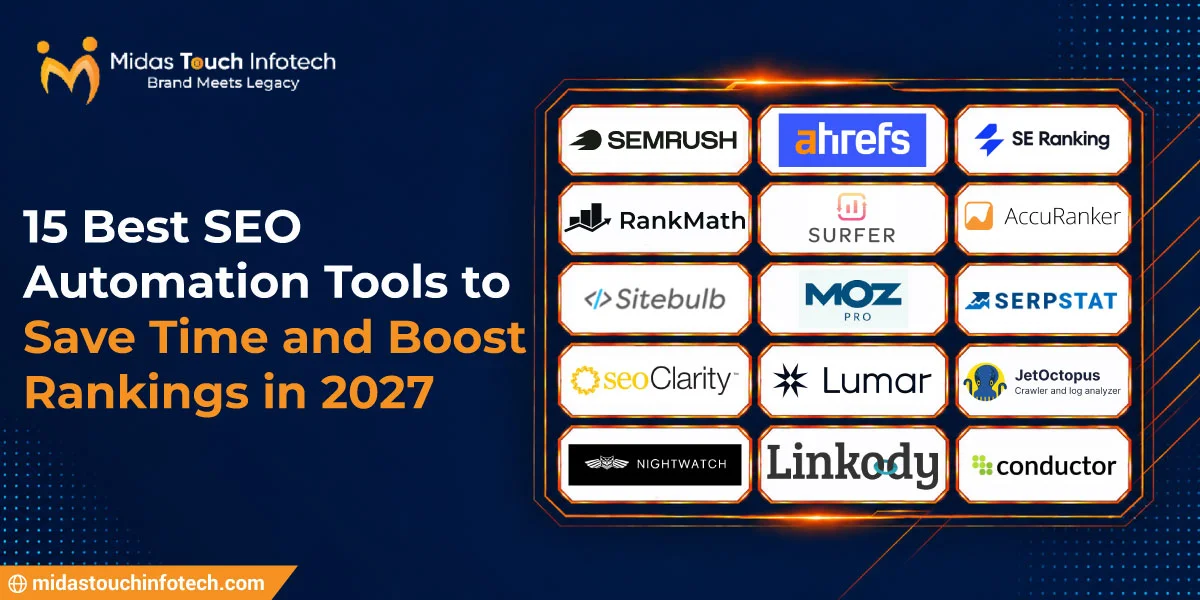
- 15 Best SEO Automation Tools to Save Time and Boost Rankings in 2027
- What Are SEO Automation Tools?
- Why Should Businesses Use SEO Automation Tools in 2027?
- ◈ Save Time on Repetitive SEO Activities
- ◈ Improve Keyword Tracking and Performance Monitoring
- ◈ Identify Technical SEO Issues Faster
- ◈ Simplify Content and On-Page Optimisation
- ◈ Automate SEO Reporting and Analysis
- ◈ Improve Campaign Efficiency and Scalability
- 15 Best SEO Automation Tools in 2027
- 1. Semrush
- 2. Ahrefs
- 3. SE Ranking
- 4. Rank Math
- 5. Surfer SEO
- 6. AccuRanker
- Key Features:
- 7. Sitebulb
- 9. Serpstat
- 10. seoClarity
- 11. Lumar
- 12. JetOctopus
- 13. Nightwatch
- 14. Linkody
- 15. Conductor
- Which SEO Tasks Can You Automate?
- ◈ Keyword Research and Rank Tracking
- ◈ Technical SEO Audits
- ◈ Content Optimisation
- ◈ Backlink Monitoring
- ◈ SEO Reporting
- How to Choose the Right SEO Automation Tool
- 1. Identify Your SEO Requirements
- 2. Evaluate Automation Features
- 3. Compare Pricing and Available Plans
- 4. Check Ease of Use and Integrations
- 5. Consider Reporting Accuracy and Scalability
- 6. Test Before Making a Decision
- Best Practices for Using SEO Automation Tools Effectively
- ◈ Automate Repetitive SEO Tasks
- ◈ Combine Automation With Human Expertise
- ◈ Review Automated SEO Reports
- ◈ Ensure AI-Generated Content Quality
- ◈ Monitor SEO Issues and Rankings
- ◈ Update SEO Automation Settings
- The Future of SEO Automation in 2027 and Beyond
- ◈ Increased Adoption of AI-Powered SEO Automation
- ◈ More Advanced Predictive SEO Insights
- ◈ Greater Automation of Technical SEO Monitoring
- ◈ Integration With AI Search Optimisation
- ◈ Continued Importance of Human Oversight
- Ready to Make SEO Automation Work for Your Business in 2027?
15 Best SEO Automation Tools to Save Time and Boost Rankings in 2027
Search Engine Optimisation (SEO) plays an important role in helping businesses improve online visibility, attract potential customers, and generate organic traffic. However, managing SEO activities manually can be challenging, especially when businesses need to track hundreds of keywords, analyse competitors, identify technical issues, and optimise website content regularly.
According to a BrightEdge research report, organic search accounted for 53.3% of trackable website traffic across the industries examined. Although these findings are from 2019 rather than a current 2027 forecast, they demonstrate the historical importance of organic search as a website traffic source.
As search engines evolve and AI-powered search experiences become more common, businesses need efficient solutions to manage their SEO campaigns. This is where SEO automation tools become valuable. These platforms simplify repetitive activities such as keyword tracking, website auditing, backlink monitoring, content optimisation, and SEO reporting.
By automating routine processes, marketing teams can reduce manual workloads, identify optimisation opportunities faster, and concentrate on strategic improvements. Businesses can also combine these tools with professional seo services india to implement effective SEO strategies and support sustainable organic growth.
In this guide, we explore the 15 best SEO automation tools to consider in 2027, including their key features, advantages, limitations, pricing models, and ideal users.
What Are SEO Automation Tools?
SEO automation tools are software applications designed to perform repetitive search engine optimisation tasks with minimal manual involvement. They collect website data, monitor SEO performance, identify optimisation opportunities, and generate actionable recommendations.
These tools use technologies such as scheduled crawling, data analysis, application integrations, and artificial intelligence to simplify SEO workflows.
For example, rather than manually checking keyword positions every day, an automated rank-tracking platform can monitor selected keywords and generate performance reports.
The main difference between manual and automated SEO is the level of human involvement required for routine processes.
Manual SEO involves individually collecting data, checking website pages, analysing keyword performance, and preparing reports. Automated SEO uses software to perform many of these activities consistently.
Common SEO activities that can be automated include:
• Keyword ranking and competitor monitoring.
• Technical website audits and error detection.
• Backlink tracking and link alerts.
• On-page SEO checks and content recommendations.
• Scheduled SEO reporting and performance analysis.
However, SEO automation supports decision-making rather than replacing human strategy, creativity, and expertise.
Why Should Businesses Use SEO Automation Tools in 2027?
As competition increases across digital channels, businesses need practical ways to manage SEO campaigns without spending excessive time on repetitive work.
The best SEO automation tools offer several advantages.
◈ Save Time on Repetitive SEO Activities
Automation reduces the need to perform routine tasks manually, including keyword checks, website crawling, backlink monitoring, and report preparation.
◈ Improve Keyword Tracking and Performance Monitoring
Businesses can monitor keyword movements, identify ranking fluctuations, and compare their search visibility with competitors through regularly updated data.
◈ Identify Technical SEO Issues Faster
Automated website audits help identify broken links, missing metadata, redirect problems, and crawling errors before they affect larger sections of a website.
◈ Simplify Content and On-Page Optimisation
AI SEO automation tools can analyse existing content and suggest improvements to headings, keyword coverage, readability, and topical relevance.
◈ Automate SEO Reporting and Analysis
Scheduled dashboards and reports allow businesses to review organic traffic, keyword visibility, and website performance without repeatedly preparing spreadsheets.
◈ Improve Campaign Efficiency and Scalability
Businesses managing multiple websites can benefit from combining automation with seo consulting services india to prioritise SEO opportunities and develop practical optimisation strategies.
Ultimately, automation helps SEO professionals spend more time planning improvements and less time gathering routine data.
15 Best SEO Automation Tools in 2027
1. Semrush

Semrush is an all-in-one digital marketing platform offering keyword research, competitor analysis, website auditing, and SEO performance monitoring. Its automated features help businesses track organic visibility and identify optimisation opportunities.
Key Features:
➔ Automated site audits and keyword rank tracking.
➔ Competitor analysis and scheduled SEO reports.
➔ AI search visibility and performance monitoring.
Pros: Comprehensive SEO toolkit, useful competitor insights, and multiple reporting options.
Cons: Higher subscription costs and a learning curve for beginners.
Pricing: Free limited-access option and paid subscription plans with different SEO and AI search allowances.
2. Ahrefs

Ahrefs is widely used for backlink analysis, keyword research, competitor monitoring, and technical SEO audits. Its monitoring features help teams identify changes in website visibility and backlink profiles.
Key Features:
➔ Backlink monitoring and link alerts.
➔ Keyword ranking and competitor research.
➔ Website auditing and SEO reporting.
Pros: Extensive backlink data, detailed competitor insights, and useful research capabilities.
Cons: Premium pricing and usage limits on certain plans.
Pricing: Free limited tools and paid Starter, Lite, Standard, Advanced, and Enterprise options.
3. SE Ranking

SE Ranking provides a range of SEO tools for businesses seeking affordable keyword tracking, website audits, and competitor monitoring.
Its automation features reduce the effort required to track SEO performance across multiple projects.
Key Features:
➔ Automated keyword rank tracking.
➔ Website audits and technical issue detection.
➔ Scheduled reports and competitor monitoring.
Pros: User-friendly interface, comprehensive tracking features, and flexible plans.
Cons: Feature limits depend on subscription level.
Pricing: Subscription-based plans with pricing influenced by tracking requirements and selected features.
4. Rank Math

Rank Math is a WordPress SEO plugin that automates several on-page and technical optimisation activities. It helps website owners manage SEO settings without manually editing code.
Key Features:
➔ XML sitemap generation and SEO metadata controls.
➔ Schema markup configuration and redirection management.
➔ SEO checks and internal linking suggestions.
Pros: Convenient WordPress integration, beginner-friendly features, and extensive SEO controls.
Cons: WordPress-specific functionality and premium feature restrictions.
Pricing: Free version and paid PRO, Business, and Agency subscriptions.
5. Surfer SEO

Surfer SEO focuses on improving content performance through data-driven recommendations and AI-assisted workflows. It helps content teams identify opportunities to strengthen existing and new articles.
Key Features:
➔ AI-assisted content creation and optimisation.
➔ Content scoring and topical recommendations.
➔ On-page analysis and content auditing.
Pros: Useful content recommendations, streamlined workflows, and collaborative editing features.
Cons: Content usage allowances and limited coverage of broader technical SEO activities.
Pricing: Paid subscription plans with different content creation and optimisation allowances.
6. AccuRanker

AccuRanker specialises in keyword ranking automation and search results monitoring. It is particularly useful for businesses that require frequent visibility updates.
Key Features:
➔ Automated keyword ranking updates.
➔ Competitor ranking comparisons.
➔ SERP feature monitoring and reporting.
Pros: Specialised rank tracking, detailed keyword segmentation, and useful performance insights.
Cons: Limited content optimisation and technical auditing capabilities.
Pricing: Paid subscription model based on keyword tracking requirements.
7. Sitebulb

Sitebulb is a technical SEO auditing platform designed to identify website issues through detailed crawling and visual reports.
Its scheduled crawling capabilities support ongoing technical website monitoring.
Key Features:
➔ Scheduled website crawling and audits.
➔ Technical SEO issue identification.
➔ Visual reports and prioritised recommendations.
Pros: Detailed technical analysis, useful visualisations, and comprehensive crawling features.
Cons: Requires technical SEO knowledge, while desktop performance may depend on computer resources.
Pricing: Paid Lite, Pro, and Cloud options, with scheduling available in supported plans.
Also Read: SEO Packages for Small Businesses: A Complete Guide to Choosing the Right Plan
8. Moz Pro

Moz Pro offers keyword tracking, website auditing, link research, and optimisation recommendations within a centralised SEO platform.
Key Features:
➔ Automated keyword rank tracking.
➔ Site crawling and technical issue reporting.
➔ Link analysis and SEO recommendations.
Pros: Accessible interface, established SEO metrics, and practical website monitoring tools.
Cons: Some advanced users may require additional specialist platforms.
Pricing: Paid subscription plans with varying usage limits.
9. Serpstat

Serpstat combines keyword research, competitor analysis, website auditing, and rank tracking to simplify everyday SEO management.
Key Features:
➔ Automated keyword position monitoring.
➔ Website auditing and technical issue detection.
➔ Competitor and search visibility analysis.
Pros: Multiple SEO features within one platform and useful competitor intelligence.
Cons: Data allowances and advanced capabilities vary by plan.
Pricing: Subscription-based pricing with different project and usage limits.
Best For: Freelancers, growing businesses, and digital marketing teams.
10. seoClarity

seoClarity is an enterprise SEO platform designed for organisations managing complex websites, multiple domains, and large keyword portfolios.
It combines automation, AI-assisted insights, and technical SEO monitoring.
Key Features:
➔ Automated technical SEO monitoring.
➔ AI-powered content and performance insights.
➔ Enterprise reporting and SEO execution capabilities.
Pros: Advanced scalability, enterprise analytics, and extensive automation functionality.
Cons: Higher costs and implementation requirements.
Pricing: Custom enterprise pricing, with packages depending on domains, keywords, and capabilities.
11. Lumar

Lumar provides website intelligence and technical SEO monitoring for organisations operating large and complex websites.
It helps teams identify crawling, indexability, and website quality issues.
Key Features:
➔ Automated technical website crawling.
➔ Indexability and website quality monitoring.
➔ Technical issue identification and reporting.
Pros: Scalable website analysis and strong technical monitoring capabilities.
Cons: Enterprise-oriented implementation and pricing.
Pricing: Custom quotations based on selected products, capabilities, and business requirements.
12. JetOctopus

JetOctopus focuses on technical SEO through website crawling, log file analysis, and search performance insights.
It is particularly useful for understanding how search engine crawlers interact with large websites.
Key Features:
➔ Automated website crawling.
➔ Log file analysis and crawl budget monitoring.
➔ Indexability, performance, and technical SEO alerts.
Pros: Strong crawling insights, log analysis, and large-site monitoring.
Cons: Requires technical knowledge to interpret advanced data.
Pricing: Subscription plans based on crawling and log analysis requirements.
13. Nightwatch

Nightwatch helps businesses monitor keyword performance across search engines, locations, and devices.
Its tracking and reporting capabilities support local and multi-location SEO campaigns.
Key Features:
➔ Automated keyword ranking updates.
➔ SERP and competitor monitoring.
➔ Website audits and scheduled SEO reports.
Pros: Useful location-based tracking, clear reporting, and keyword segmentation.
Cons: Less comprehensive for advanced content creation workflows.
Pricing: Paid plans based on keyword volume and tracking requirements.
14. Linkody

Linkody is a dedicated backlink monitoring tool that helps businesses track new and lost links without regularly checking their backlink profiles manually.
Key Features:
➔ Automatic new and lost backlink tracking.
➔ Email alerts for backlink changes.
➔ Competitor backlink monitoring and reporting.
Pros: Simple interface, focused backlink monitoring, and accessible entry-level plans.
Cons: Limited capabilities outside link monitoring and analysis.
Pricing: Paid Webmaster, Advanced, Pro, and Agency tiers, with a trial option.
15. Conductor

Conductor is an enterprise-focused platform offering SEO insights, website monitoring, content optimisation, and AI search performance capabilities.
It supports collaboration between SEO, marketing, and content teams.
Key Features:
➔ Automated website monitoring and SEO insights.
➔ Keyword performance and content recommendations.
➔ SEO and AI search visibility reporting.
Pros: Enterprise workflows, cross-team collaboration, and broad search visibility features.
Cons: May be more complex than smaller organisations require.
Pricing: Tiered enterprise solutions, including Essentials and Growth packages, with limits varying by plan.
Which SEO Tasks Can You Automate?
SEO automation can simplify multiple activities across keyword research, technical optimisation, content management, and performance reporting. Businesses can select tools according to their specific requirements instead of automating every SEO process.
◈ Keyword Research and Rank Tracking
Manually tracking keyword rankings across different locations and devices requires significant effort. SEO automation platforms can collect keyword performance data at scheduled intervals.
These tools can help businesses:
• Monitor keyword ranking changes.
• Identify emerging keyword opportunities.
• Compare competitor rankings.
• Track visibility across locations and devices.
Automated keyword tracking allows SEO teams to identify important changes and make timely optimisation decisions.
◈ Technical SEO Audits
Technical website problems can prevent search engines from properly crawling, understanding, or indexing important pages.
Automated auditing tools regularly scan websites and identify issues requiring attention.
Common automated checks include:
• Broken links and redirect errors.
• Missing or duplicate metadata.
• Crawling and indexability problems.
• Canonical tag and sitemap issues.
Scheduled audits help businesses identify technical problems earlier and maintain a healthier website structure.
◈ Content Optimisation
Content optimisation is another important application of SEO automation.
The top tools for SEO content automation analyse existing website pages and provide recommendations based on selected keywords, search intent, and content structure.
They can assist with:
• Content gap identification.
• Heading and keyword recommendations.
• On-page SEO analysis.
• Content refresh opportunities.
However, automated recommendations should be evaluated by experienced content professionals to ensure accuracy, originality, and usefulness.
◈ Backlink Monitoring
Backlinks remain useful signals for understanding a website’s link profile and discovering relationships with other websites.
Automation tools can monitor backlink changes and notify SEO teams when important links appear or disappear.
Businesses can use automated monitoring to identify new backlinks, track lost links, and analyse competitor backlink profiles.
These insights support link-building analysis, although not every backlink change requires immediate action.
◈ SEO Reporting
SEO reporting involves collecting information from multiple platforms and presenting performance results clearly.
Automated reporting tools simplify this process by combining keyword rankings, organic traffic, technical issues, and conversion data into scheduled reports.
Businesses can monitor performance trends and share relevant information with stakeholders without rebuilding reports manually.
How to Choose the Right SEO Automation Tool
Selecting the right SEO automation software depends on your website requirements, campaign objectives, team capabilities, and budget.
Before investing in a platform, businesses should evaluate the following factors.
1. Identify Your SEO Requirements
Determine whether you primarily need keyword tracking, content optimisation, technical auditing, backlink analysis, or a complete SEO management solution.
2. Evaluate Automation Features
Review the platform’s scheduling options, automated alerts, reporting functions, AI capabilities, and integration support. Choose features that solve your actual operational challenges.
3. Compare Pricing and Available Plans
Consider subscription costs, project limits, tracked keyword allowances, user seats, and additional feature charges.
A low-cost platform may become expensive when your SEO requirements increase.
4. Check Ease of Use and Integrations
Choose tools that work with your existing workflow and support relevant integrations, such as Google Analytics, Google Search Console, or your content management system.
5. Consider Reporting Accuracy and Scalability
Evaluate data freshness, tracking locations, reporting capabilities, and support for multiple websites.
6. Test Before Making a Decision
Use available trials or demonstrations to understand how effectively a platform handles your SEO requirements.
Working with a professional seo consultant can also help businesses evaluate different automation platforms and avoid investing in unnecessary software.
The ideal solution is not necessarily the platform with the most features. It is the one that provides useful data, improves productivity, and supports your SEO objectives.
Best Practices for Using SEO Automation Tools Effectively
Automation can improve SEO efficiency, but its effectiveness depends on how businesses implement and manage it.
Following these practices helps maintain quality while reducing manual effort.
◈ Automate Repetitive SEO Tasks
Start with predictable activities such as keyword monitoring, website crawling, backlink tracking, and scheduled reporting.
This creates immediate workflow improvements without introducing unnecessary complexity.
◈ Combine Automation With Human Expertise
SEO automation tools provide data and recommendations, but they cannot independently understand every business objective or customer requirement.
Human expertise remains important for keyword prioritisation, content strategy, technical decisions, and campaign planning.
◈ Review Automated SEO Reports
Automated reports should be reviewed regularly rather than accepted without analysis.
Check unusual keyword movements, organic traffic fluctuations, indexing changes, and conversion performance.
This helps teams distinguish meaningful SEO changes from routine data variations.
◈ Ensure AI-Generated Content Quality
AI-assisted content tools can speed up research, outlining, and optimisation.
However, businesses should review generated content for factual accuracy, relevance, originality, and consistency with brand messaging.
Publishing content solely to satisfy automated scores does not guarantee stronger search rankings.
◈ Monitor SEO Issues and Rankings
Configure alerts for important issues such as broken pages, unexpected ranking declines, or changes affecting indexability.
Prioritise problems according to their potential impact on website traffic and business performance.
◈ Update SEO Automation Settings
Review automation settings as your website grows and SEO priorities change.
Update keyword lists, competitor groups, crawling schedules, reporting requirements, and notification preferences.
Regular adjustments help ensure that automated workflows continue delivering useful insights.
Also Read: Complete On-Page SEO Checklist: 25+ Factors to Optimise Your Website Pages
The Future of SEO Automation in 2027 and Beyond
SEO automation is expected to become more sophisticated as artificial intelligence, machine learning, and search technologies continue evolving.
Businesses will increasingly look for platforms capable of analysing larger datasets, identifying opportunities, and simplifying complex optimisation workflows.
Several developments are likely to shape SEO automation in 2027 and beyond.
◈ Increased Adoption of AI-Powered SEO Automation
AI-powered platforms are expected to support more activities involving content research, keyword clustering, search intent analysis, and optimisation recommendations.
Businesses evaluating the best AI tools for SEO automation should prioritise practical capabilities rather than relying only on AI-generated suggestions.
◈ More Advanced Predictive SEO Insights
Predictive analytics may help teams identify emerging search trends, anticipate content opportunities, and recognise potential performance risks.
However, predictions will remain estimates rather than guarantees of future rankings.
◈ Greater Automation of Technical SEO Monitoring
Automated crawlers and monitoring platforms are likely to provide more detailed issue detection, prioritisation, and recurring technical audits.
This will be especially useful for businesses managing large websites with frequently changing content.
◈ Integration With AI Search Optimisation
As AI-generated answers become part of search experiences, businesses may increasingly measure their visibility across traditional search results and AI-powered discovery platforms.
Some of the best AI SEO automation tools for enterprises already combine search visibility monitoring with content intelligence and technical SEO analysis.
◈ Continued Importance of Human Oversight
Despite improvements in automation, strategic thinking will remain essential.
Experienced SEO professionals will still need to validate recommendations, understand customer intent, create useful content, and align optimisation activities with business objectives.
The future of SEO automation is therefore likely to focus on combining intelligent software with experienced SEO teams.

Ready to Make SEO Automation Work for Your Business in 2027?
SEO automation tools can help businesses save time, simplify repetitive tasks, and make better-informed optimisation decisions. From keyword monitoring and technical audits to content analysis and reporting, the right platform can significantly improve SEO workflow efficiency.
However, selecting automation software is only one part of building a successful organic search strategy.
Businesses also need clear SEO objectives, accurate performance analysis, high-quality content, and continuous optimisation to achieve sustainable results.
Partnering with a professional seo company can help you choose suitable automation tools, identify high-impact opportunities, and implement effective SEO strategies aligned with your business goals.
Whether you want to improve keyword visibility, strengthen technical SEO, or scale your content marketing activities, combining automation with professional expertise can help you build a more efficient and sustainable SEO process.
Key-Takeaways
- Save Time With SEO Automation: Automate repetitive tasks like keyword tracking, website audits, backlink monitoring, and SEO reporting.
- Explore the Best SEO Tools: Compare 15 SEO automation tools based on features, benefits, pricing, limitations, and business requirements.
- Improve Search Rankings: Automated keyword monitoring, technical audits, and content optimisation help improve SEO performance and online visibility.
- Choose the Right SEO Tool: Evaluate automation features, ease of use, integrations, pricing, and scalability before selecting a platform.
- Combine AI With Human Expertise: Use AI-powered automation alongside expert SEO strategies to improve content quality and decision-making.
- Drive Long-Term Organic Growth: Continuous monitoring, performance analysis, and SEO optimisation help businesses achieve sustainable results.

Mit Thakkar
Mit Thakkar, CEO of Midas Touch Infotech and a recognized LinkedIn SEO influencer, possesses extensive expertise in branding, website development, and digital marketing. He excels in transforming ideas into impactful digital strategies.